Seamless Belt Splicing Power
Belt Vulcanizing Press
Reliability Meets Durability. When it comes to maintaining heavy-duty conveyor systems, your vulcanizing press is the heartbeat of the operation. Whether you are working in mining, manufacturing, or logistics, the goal is always the same: maximum uptime.
Vulcanizing Presses Hydraulic
SMARTER MACHINES, STRONGER BONDS
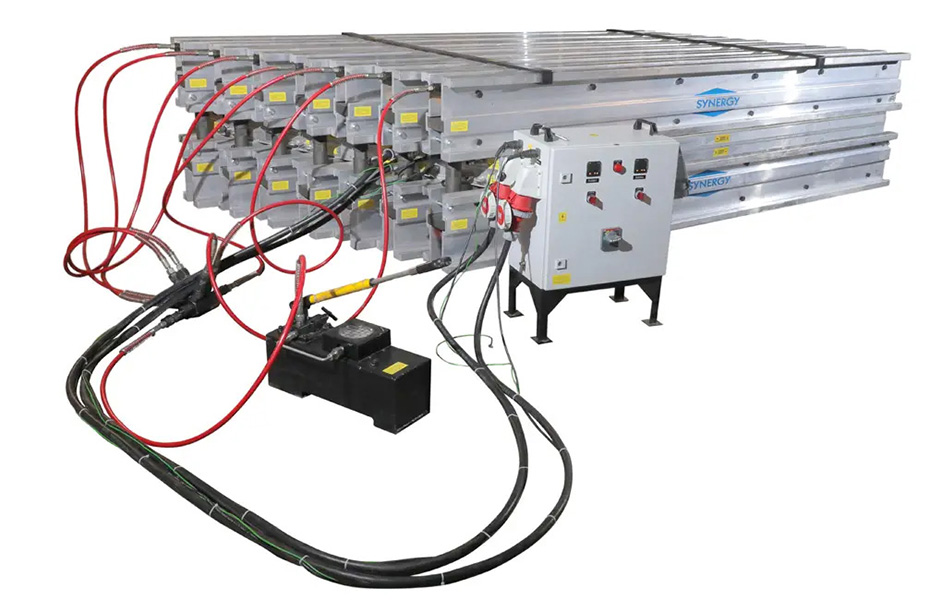
Synergy designs & manufactures Portable Belt Vulcanizing Press for Indian & Overseas customers for all types of Conveyor Belt such as Steel Cord Belt, Pipe Conveyor Belt, Steep Angle Belt and General Fabric Belt.
- Portable and lightweight cross-beam profile.
- Conventional, robust heating platens combined with hydraulic pressure systems.
- Heating platen with air or water cooling.
- Accurate temperature regulation through electronic Control panel.
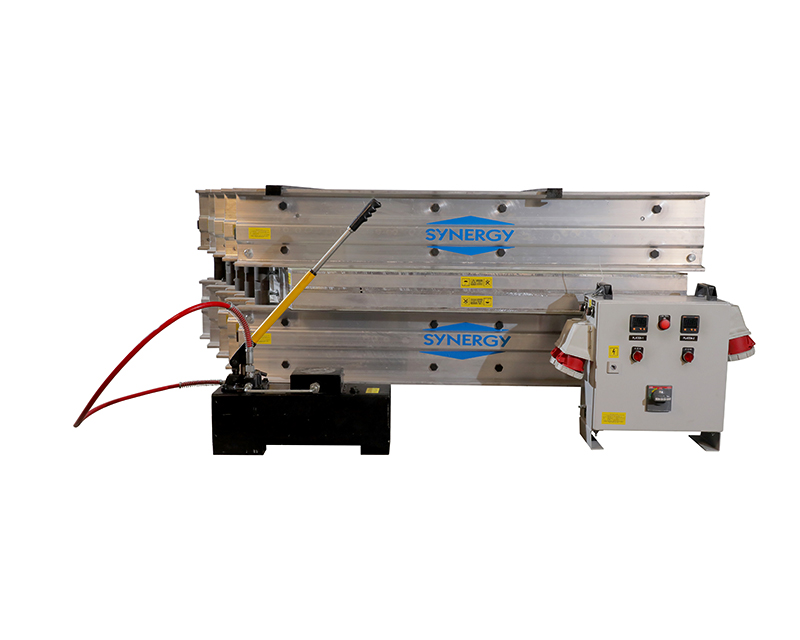
- Easier and faster pressure build-up by using hydraulic hand pump or motorized power pack unit.
- Available for splicing up to 3200 mm belt width
Heating platens
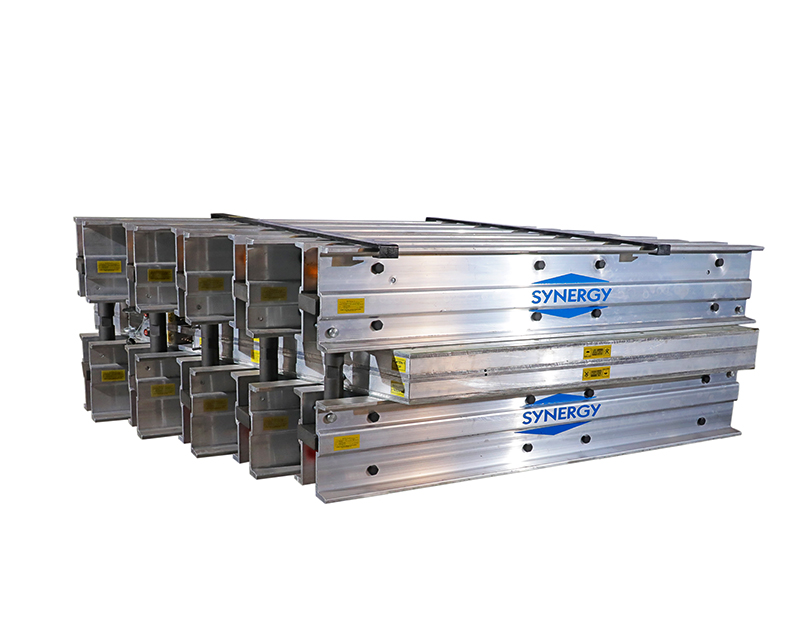
- Heating platens of frame-type construction, made of a high-quality, corrosion-resistant aluminium alloy.
- Shape: rhombic (16.7° and 22°), rectangular (90°).
- Optionally available with air and/or water cooling.
- Robust, flush-fitting electrical connections guaranting safe operation.
- Uniform pressure and temperature distribution.
Cross beams with hydraulic pressure system
- Customized Extruded Profile made of quality aluminium alloy.
- Maximum tensile and bending strength with minimum weight.
- Compact, high-pressure, hydraulic light-metal cylinders ensure even surface pressure.
Pumps
- Hydraulic Hand Pump or Motorized Power Pack.
- Distributor.
- High-pressure hoses.
- Hydraulic oil (only for Hand Pump).
Vulcanizing presses pressure bag
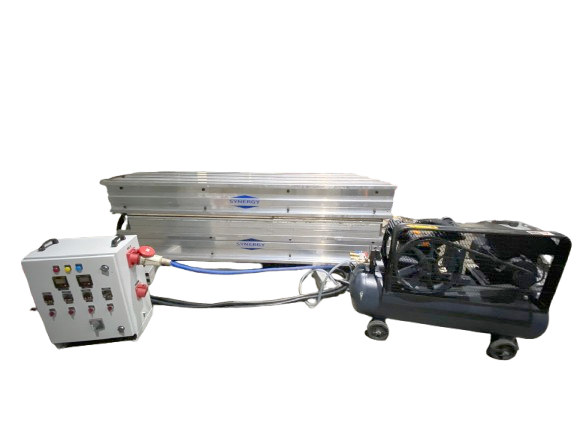
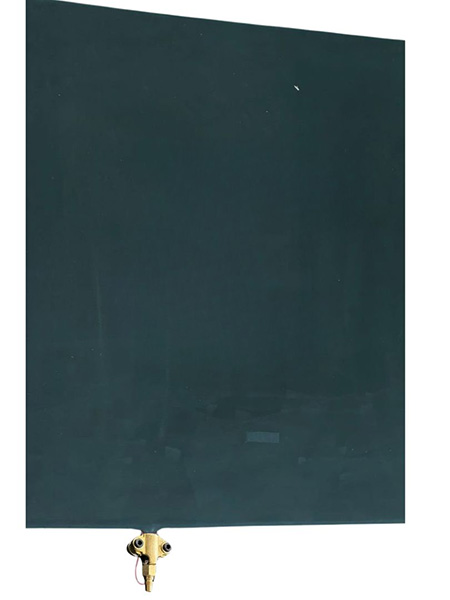
Low weight of the individual components. Pressure is applied via a full-surface pressure bag. Filled with compressed air or water.
- Low weight of the individual components
- Pressure is applied via a full-surface pressure bag
- Filled with compressed air or water
- Can exert a maximum surface pressure of up to 14 kg/cm²
- Heating platens are equipped with silicone heating pads
- Even temperature distribution
- Even pressure distribution
- Integrated cooling system
- TÜV-tested pressure pad
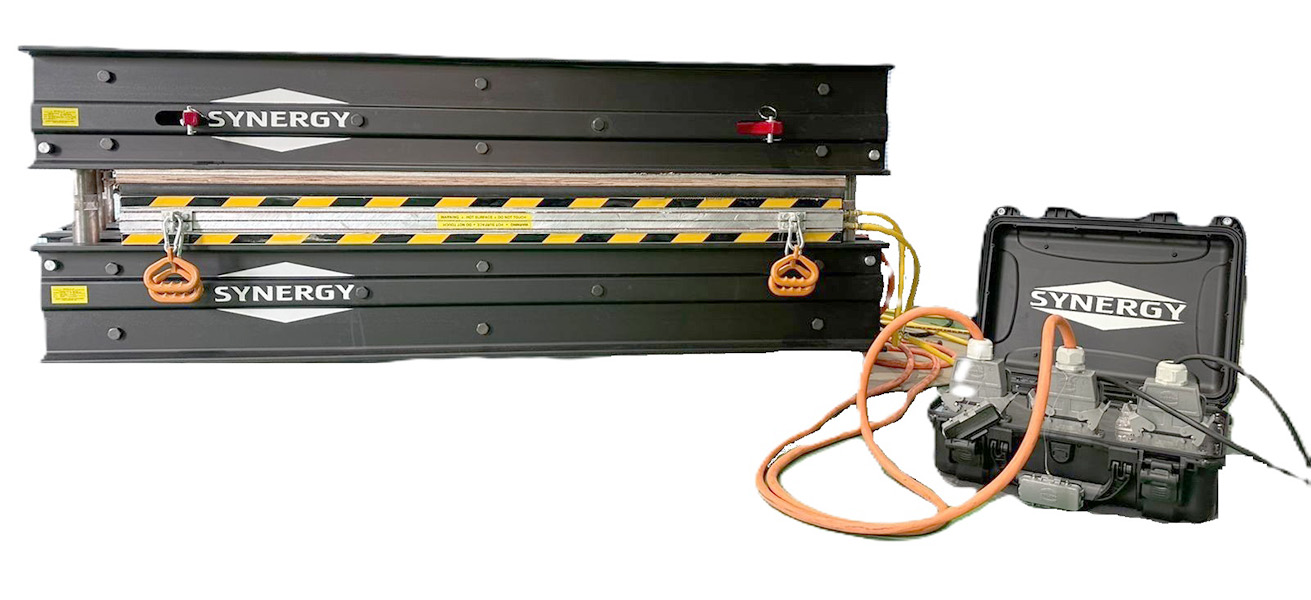
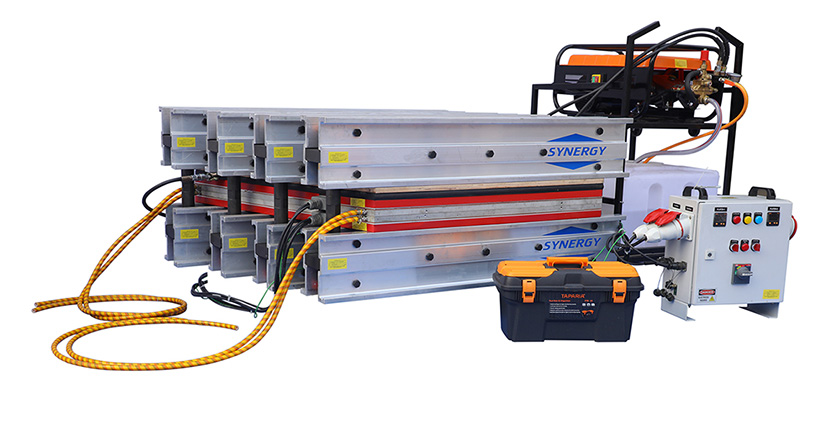
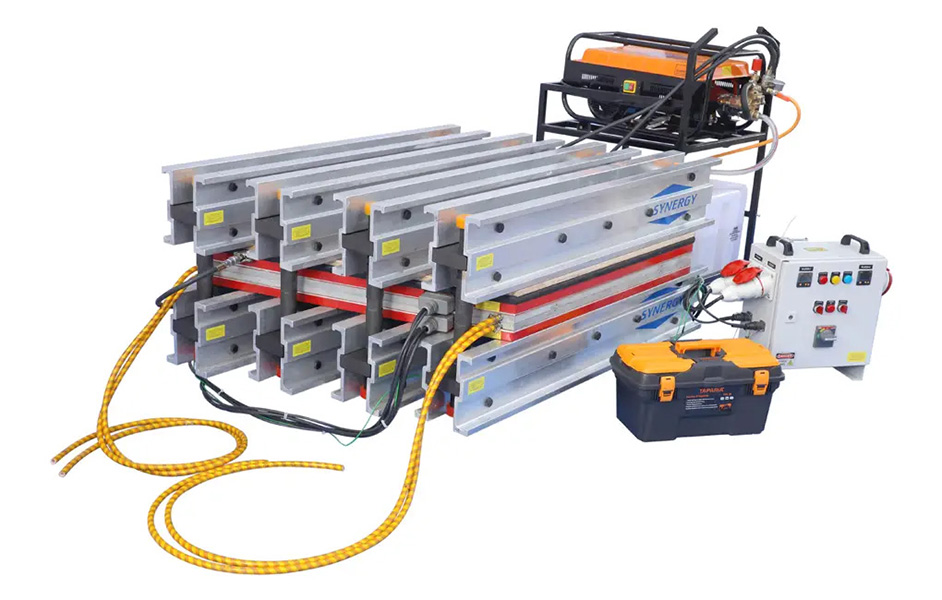
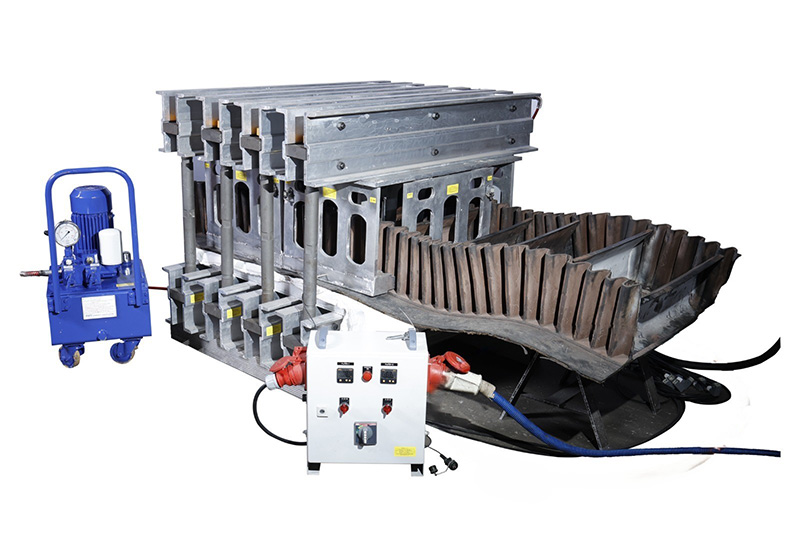
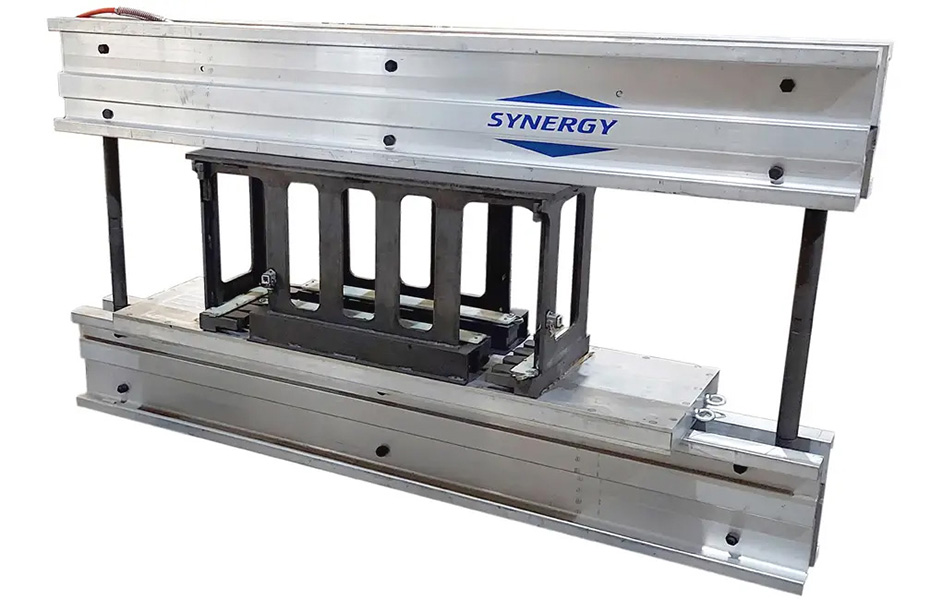
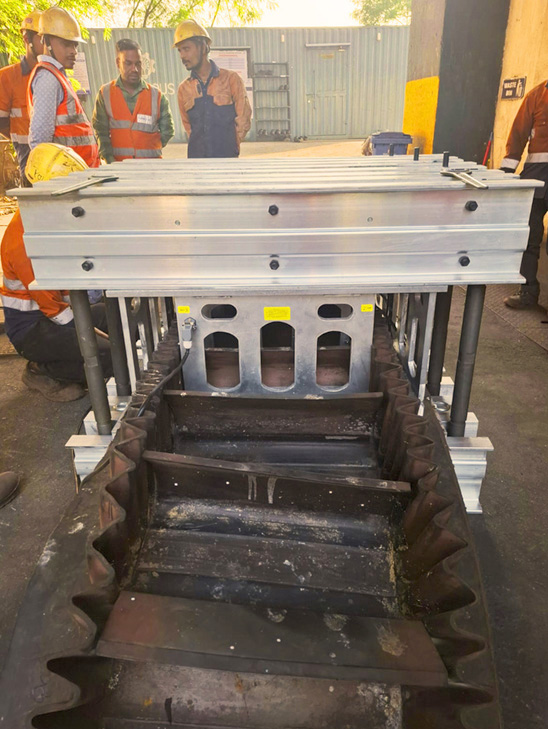
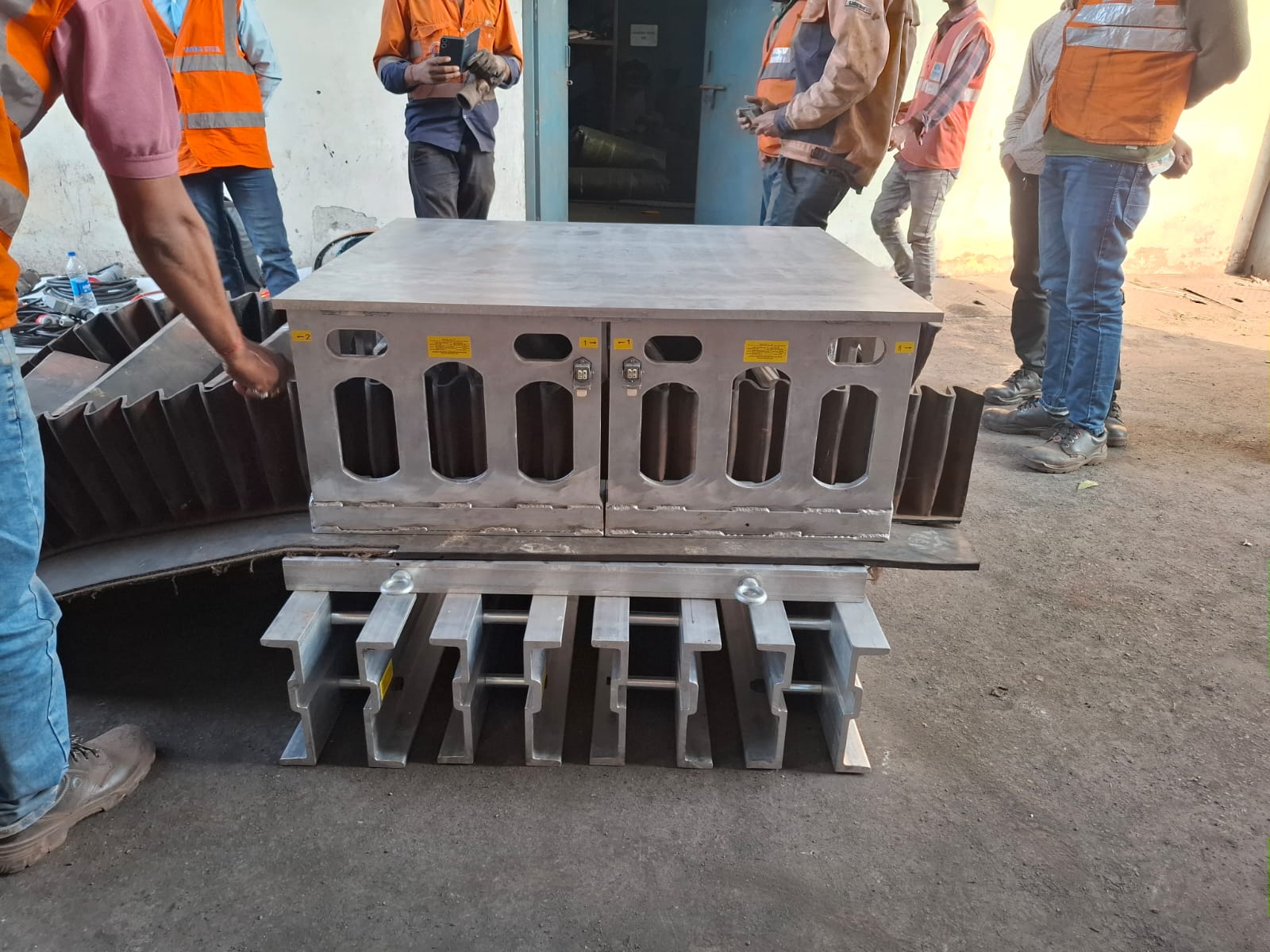
Vulcanizing press for Sidewall jointing press
This press is used for Hot Jointing Sidewall and Cleat to Mother belt at site. The press is completely tailor-made as per belt profile and customer requirement.
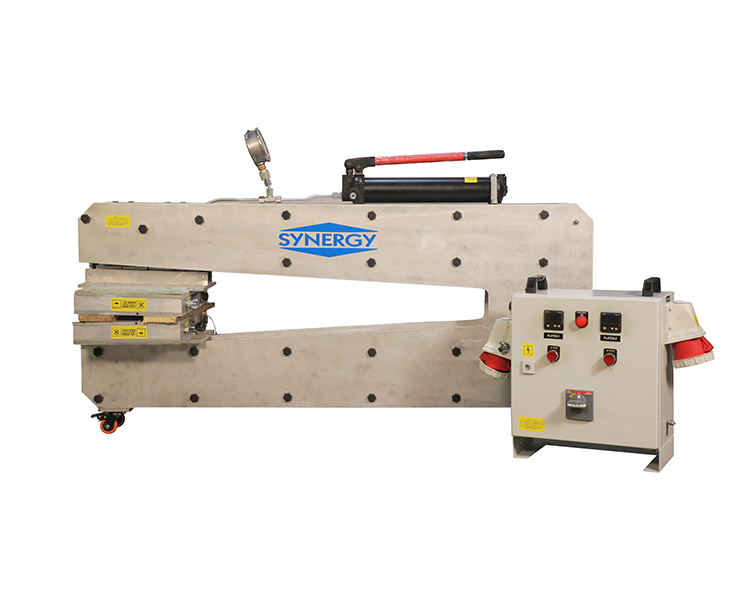
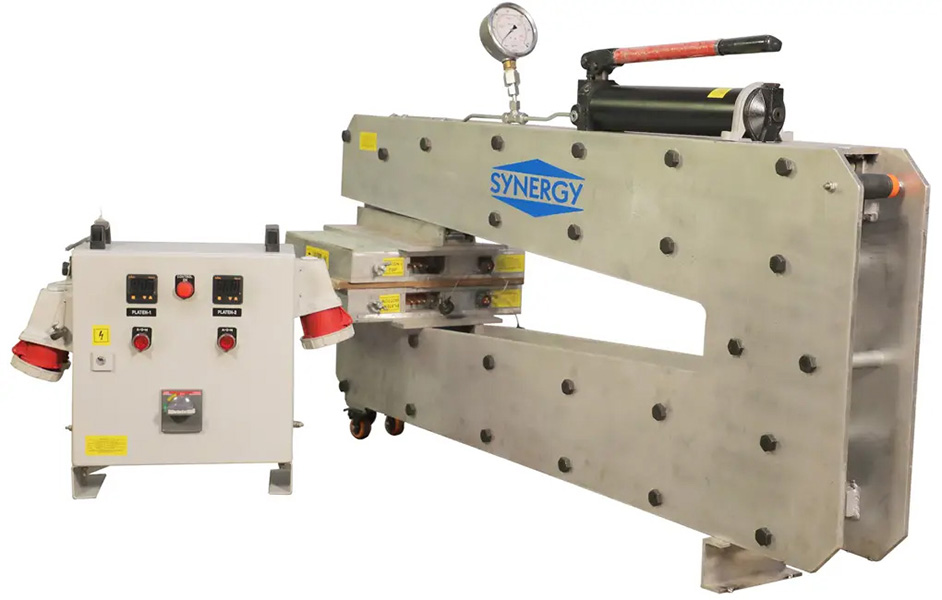
C clamp
Pressure build-up by means of hydraulic light metal cylinders and high-pressure pump (manual or electric).
- C-clamp made of high-alloy aluminum.
- Highest bending resistance at minimum weight.
- Designed for pressure forces from 6 kg/cm² to 9 kg/cm².
- For repairs from the edge of the belt up to the center of the belt.
- Available for belt widths up to 2,400 mm.
- Pressure build-up by means of hydraulic light metal cylinders and high-pressure pump (manual or electric).
- Built-in protection against hose breakage ensures that hydraulic pressure is maintained in the event of hose failure or a sudden pressure drop.
- Heating platen made of high-quality, corrosion-resistant aluminum alloy.
- Minimum size of 300 × 300 mm is available for spot repairs.
- Available for longitudinal repairs in any required length up to 3,000 mm and widths starting from 500 mm.
- Specially developed heating systems and profile reinforcements guarantee optimum pressure and temperature distribution.
- Available with either air or water cooling.
- Robust and flush final electrical connections to ensure safe operation.
- Electrical control panel comes with electronic controls with digital display of set point and actual temperatures.
Product Gallery
Sliding Frame
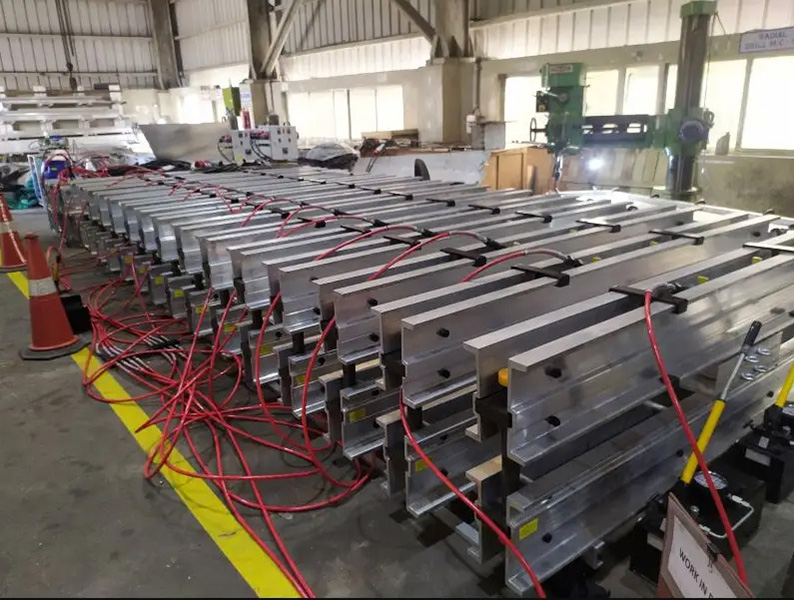
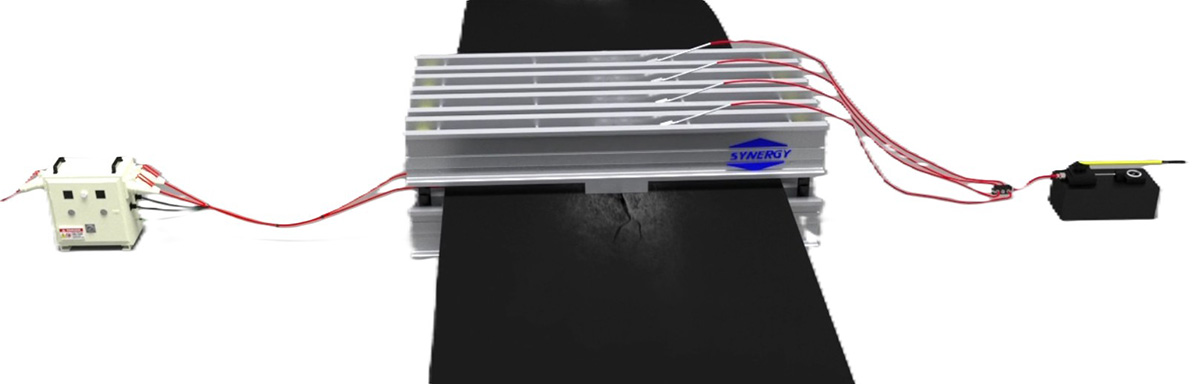
We offer specially designed press which can repair a belt on site, to ensure extended belt life. With this press the longitudinal slit, localized damage, holes or any other similar external injury can be repaired.
- Pressure framemade of high-alloy aluminum.
- Robust and suitable for repairing higher grade steel cord belt.
- Designed for pressure forces 6 kg/cm2to9 kg/cm2.
- For repairs from the edge of the belt up to the center of the belt.
- Available for any beltwidth.
- Pressure build-up by means of hydraulic light metal cylinders and high-pressure pump (manual or electric).
- The heating platen and hydraulic cylinder can be custom placed for any horizontal or vertical type of slit repair with the handle mounted on the cylinder.
- Built in protection against hose breakage – the hydraulic pressure is maintained in the event of hose breakage and sudden drop of pressure.
- Heating platen made of high-quality corrosion- resistant aluminium alloy.
- A minimum size of 300 x 300 mm is available for spot repairs.
- Available for longitudinal repairs in any required length up to 3000 mm and width from 500 mm.
- Multiple of 3000 mm unit can be arranged in series for longer repair.
- Specially developed heating systems and profile reinforcements guarantee optimum pressure and temperature distribution.
- Available with either air or water cooling.
- Robust and flush final electrical connections to ensure safe operation.
- Electrical control panel comes with electronic controls with digital display of set point and actual temperatures.
Accessories
Consists of all the tools and tackles required for preparing the belt for splicing.
- Control Panel
- Hydraulic Hand-Pump with Hose
- Power Pack
- Water Pump
- Air Compressor
- Edge Bar
- Edge Clamp
- Tool Kit
Product Gallery
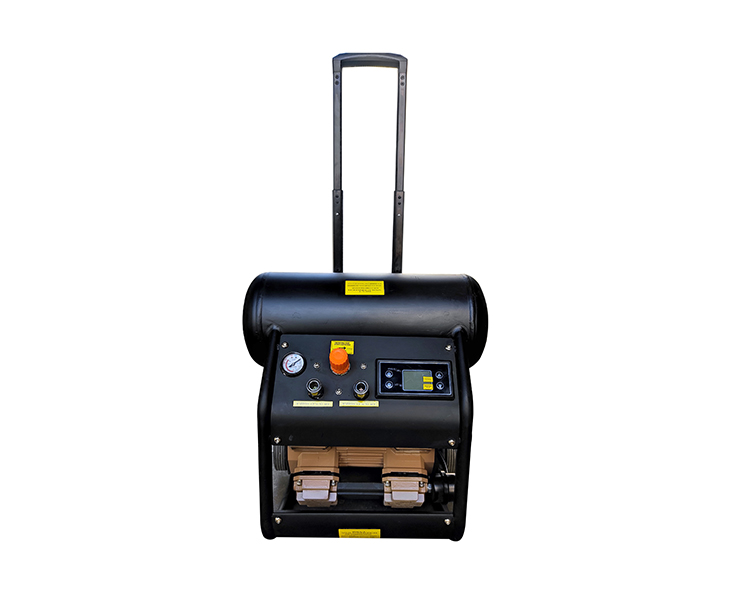
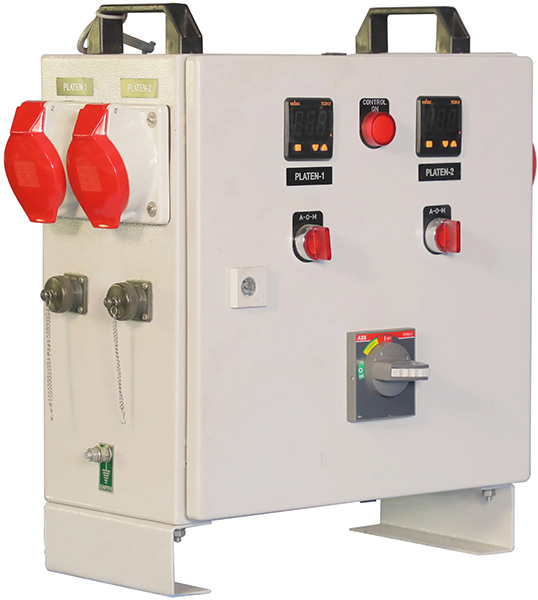
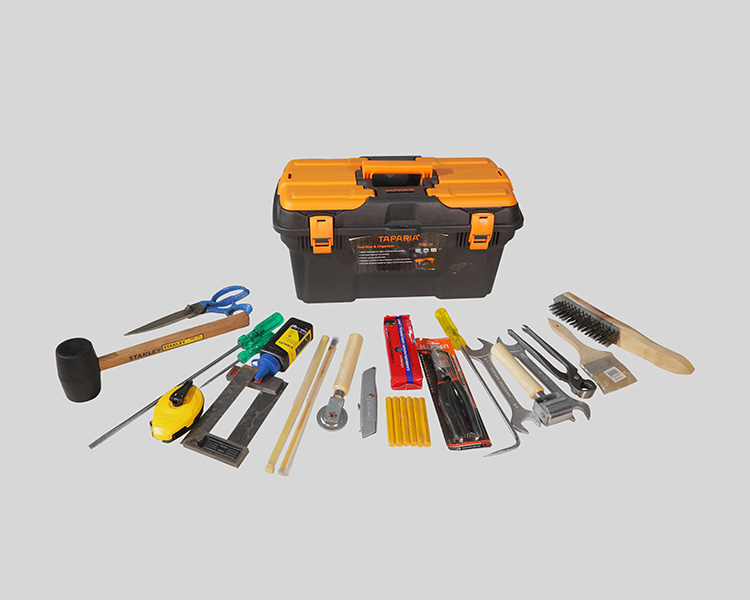
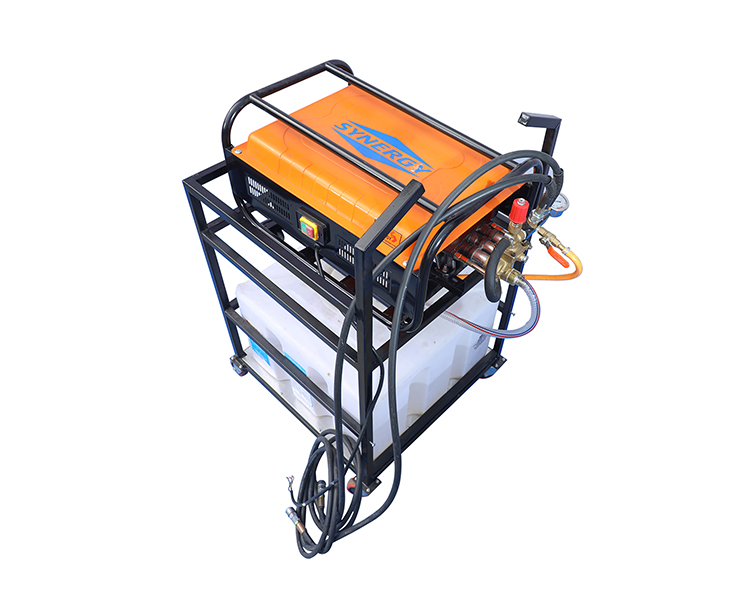
Control Panel
Electrical connection as per CEE standards. Exact temperature reading in each heating platen via thermo sensor PT 100. Electronic controller with digital display of actual temperatures.
- Electrical connection as per CEE standards.
- Exact temperature reading in each heating platen via thermo sensor PT 100.
- Electronic controller with digital display of actual temperatures.
- Quick and simple programming of the electronic temperature control.
- Manual operation in case of failure of electronic controller.
- The controller tolerance is only about 1% of the value set.
- Differential monitoring of the individual heating circuits.
- Optional: three-phase current- or single-phase power outlet at 415 Volt.
| Control box | Input | Output |
|---|---|---|
| Double | 415 V, 32 A | 2 x 16 A |
| Fourfold | 415 V, 63 A | 4 x 16 A |
| Double | 415 V, 63 A | 2 x 32 A |
FAQ
A belt vulcanizing machine is used to splice or repair conveyor belts. It applies heat and pressure to cure the belt material, creating a solid and durable bond.
These machines can vulcanize all conceivable belt types with Fabric, Steel Cord, and Aramid as tension members.
There are mainly three(3) types of Belt Vulcanizing Machines. Portable Vulcanizing Machines are ideal for on-site repairs and splicing. Workshop Vulcanizing Machines, used in controlled environments for precision splicing and repairs, and Repair Press- used for repairing Spot/Puncture/Longitudinal Slits/ Edge.
There are three(3) critical components of Belt Vulcanizing Machines. The first is the Heating Platens, which help heat the belt to the required temperature. The second is the Pressure System, which ensures a strong bond. Most notably, the last one is the Cooling System, which is essential for cooling the platens after vulcanization to set the bond.
- Step 1 is preparation, for cleaning and preparing the belt ends
- Step 2 is heating; apply heat through the platens.
- Step 3 is pressurizing; it helps apply pressure to ensure a strong bond.
- Step 4 cooling: allow the platens to cool under controlled conditions.
- Step 5 use proper vulcanizing chemicals and rubber.
The processing time varies but generally ranges from 30 minutes to a few hours, depending on the belt type and thickness.
Depending on the belt material, the temperature typically ranges between 140°C and 160°C (284°F and 320°F).
Pressure requirements usually range from 70 to 140 psi.
Safety precautions should be considered throughout the vulcanization process. Always remember these three steps.
- Wear appropriate PPE.
- Ensure proper ventilation.
- Follow manufacturer guidelines for operating the machine.
Not all conveyor belt repairs do not use a vulcanizing machine; some may require mechanical fasteners or other repair methods, depending on the site's condition.
Hot Vulcanizing uses heat and pressure to splice or repair belts; however, Cold Vulcanizing uses chemical adhesives without heat.
Regular maintenance is essential. Frequency depends on usage, but a thorough inspection should generally be conducted monthly, with detailed maintenance every six months.
A disadvantage of Vulcanization is improper heat distribution and insufficient or excessive pressure.
There are five (5) essential tips for Successful Vulcanization,
- Always follow the manufacturer’s guidelines.
- Design proper splice length.
- Ensure that the belt ends are clean and properly prepared.
- Monitor temperature and pressure closely.
- Skilled splicer (workforce).
More robust and durable splices and smoother belt surfaces are needed, increasing the belt lifespan.
Platens are typically made of grade aluminium and are designed to distribute heat evenly.
Yes, but adjustments or different platens may be needed to accommodate different belt widths. A combination of platens can be designed as per the user’s requirement.
Proper maintenance means a vulcanizing machine can last many years, often over a decade. Even the machine, after prolonged use, can be refurbished by the manufacturer for further use for many more years.
Yes, portable Repair Presses such as spot repair presses, Edge Repair Presses & Slit Repair Presses are designed explicitly for on-site repairs.
Costs vary widely based on the machine type and features, ranging from a few thousand to tens of thousands of dollars. For more detailed information on belt vulcanizing machines, contact our engineering Team or explore our comprehensive guides!